On June 14, 2026 — President Trump’s 80th birthday — thousands of people gathered on the South Lawn of the White House to watch UFC Freedom 250. What most of them did not know was that the FBI had spent four days unraveling a plot to kill them.
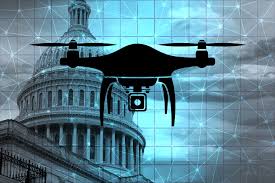
Federal prosecutors charged five men across four states: Tycen Proper, 19, of Danville, Ohio; Bryan Omar Roa, 24, of Calimesa, California; Michael Alan Thomas, 32, of Pinon Hills, California; Daniel Eskridge, 32, of Kidder, Missouri; and Abraham Hermosillo Alvarez, 31, of Omaha, Nebraska. Investigators identified a network of at least 19 people connected to the planning. The alleged scheme was specific: deploy drones loaded with explosives over the UFC event to force a mass evacuation, then position snipers to shoot “high-value targets” — including U.S. senators — as the crowd fled.
The group began organizing in March on TikTok in a chat called “Vanguard of the Old,” then moved to the encrypted messaging app Signal. They organized themselves into four tiers — from those willing to die in the attack to those designated as drone operators and getaway drivers. They shared maps of the National Capital Region, discussed sniper coordinates, and pooled money to buy equipment. Alvarez, identified by the FBI as the operational coordinator, had already built one functional drone and was assembling more explosive payloads at the time of his arrest.
A Knox County sheriff in Ohio found Proper at a medical facility on June 11, three days before the event, after his own mother reported his behavior to law enforcement. Officers recovered thousands of rounds of ammunition, an assault-style rifle, and a bullpup rifle purchased June 5 and painted with an American flag. The court documents describe a group that believed “the United States needed to be torn down so that it could be rebuilt.” Their stated grievances included U.S. support for Israel, the Jeffrey Epstein files, and data centers.
Two of the five charged are from California.
What followed the arrests became its own story. FBI Director Kash Patel publicly announced the disrupted plot on social media before the Secret Service said it was ready for that disclosure. The Secret Service pushed back hard, arguing it led the operation and that Patel’s announcement compromised an active investigation. Acting Attorney General Todd Blanche issued a formal statement praising the operation without addressing the inter-agency friction directly. The investigation remains open, with at least 14 additional suspects still being traced through encrypted chat logs.
The episode raises questions that go beyond the plot itself. First: how a network of this size — spanning at least six states, organized through consumer platforms, purchasing tactical gear openly — got as far as it did before someone’s mother made a phone call. Second: whether the public announcement of a partially dismantled network, with 14 suspects still unaccounted for, was the right call at the right time.
The FBI and Secret Service are both claiming credit for stopping an attack that, by all available evidence, they did stop. That outcome matters. But so does the question of what happens the next time, when there is no concerned parent willing to call the sheriff.