ISLAMABAD / WASHINGTON — June 25, 2026
Less than two weeks after President Trump and Iranian President Masoud Pezeshkian signed the Islamabad Memorandum of Understanding — the framework meant to end the U.S.-Iran war and reopen the Strait of Hormuz — both sides are publicly contradicting each other on the deal’s two most essential elements: nuclear inspections and control of the world’s most critical oil chokepoint.
The disputes are not minor footnotes. They go to the core of what the agreement was supposed to deliver.
On the nuclear question, Trump declared Tuesday that Iran had “fully and completely” agreed to allow international inspectors back into its bombed enrichment facilities. Iran’s Foreign Ministry spokesperson Esmaeil Baghaei responded the same day, flatly denying that any such agreement exists. “There are currently no plans for visits or inspections by the UN nuclear watchdog,” Baghaei said, adding that Iran’s dealings with the International Atomic Energy Agency would be governed strictly by existing procedures and decisions by Iran’s Supreme National Security Council.
IAEA Director General Rafael Grossi tried to thread the needle, saying inspections will happen — eventually. “Whether this happens the day after tomorrow or in one week or in 10 days, it’s important, but not essential,” he said, while firmly stating that the MOU “says explicitly” that nuclear activities “will be supervised by the IAEA — in all letters.” His confidence was not matched by Iran’s deputy foreign minister Kazem Gharibabadi, who publicly criticized Grossi on X after his remarks: “You cannot advance the ‘stir up and take over’ policy with media hype.”
The stakes of this standoff are substantial. Since Israeli and U.S. strikes on Iran’s nuclear facilities in 2025, the IAEA has been blocked from visiting enrichment sites. Iran is believed to hold enough highly enriched uranium — enriched to 60% purity, a level no other country maintains without a weapons program — to potentially build as many as 10 nuclear weapons. Without inspector access, there is no way to verify whether Iran is diluting its stockpile as the MOU requires, or quietly moving it.
Meanwhile, the Strait of Hormuz remains a separate but equally consequential flashpoint. Iran’s parliamentary speaker Mohammad Bagher Ghalibaf declared this week that “the Strait of Hormuz will never return to its pre-war conditions and will be administered by the Islamic Republic of Iran.” Secretary of State Marco Rubio, traveling through the Gulf to brief Arab allies, pushed back directly: “It’s an international waterway. No country is allowed to charge tolls or fees on an international waterway.”
Iran and Oman issued a joint statement asserting sovereignty over their respective territorial waters and announcing plans to jointly manage “services” in the strait, with “costs associated.” Iran’s Revolutionary Guard warned Thursday that ships using a new alternative Hormuz corridor without authorization “will be dealt with.”
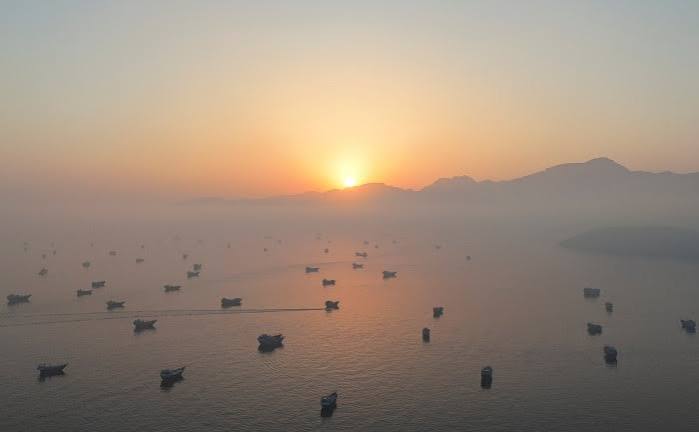
Ship traffic, while resuming, remains far below normal. An estimated 39 vessels transited the strait Monday — compared to roughly 100 per day in peacetime. More than 11,000 sailors remain stranded aboard approximately 600 ships; the International Maritime Organization says evacuating them will take “a few weeks,” at a rate of about 50 vessels per day.
Charles Kupchan, a senior fellow at the Council on Foreign Relations, was blunt in an assessment to Al Jazeera: there is “no way” Washington and Tehran can finalize a comprehensive agreement within 60 days given the profound gaps that remain.
What was signed in Islamabad on June 17 was never a peace deal. It was a pause — a structured window in which the hard questions were deferred. Eight days later, those questions are not being deferred quietly. They are being answered in public, and the answers from each side are not compatible.
The clock is running. The channel isn’t clear yet.
— Jose E. Navarro, The Navarro Report / Human-Directed AI Journalism: Research, analysis, and editorial direction by the author. Drafted in partnership with Claude AI (Anthropic).