
WASHINGTON — National Affairs | The Navarro Report
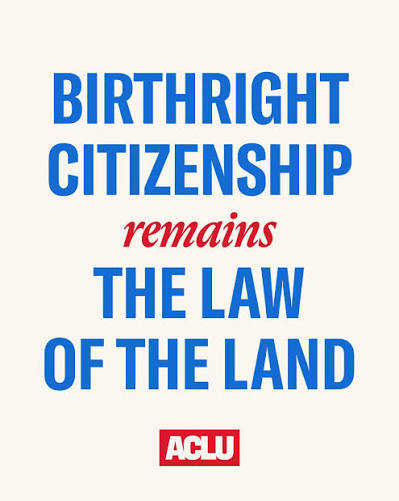
The U.S. Supreme Court ruled 6-3 on Tuesday that the Constitution guarantees automatic citizenship to virtually all children born on American soil, rejecting President Donald Trump’s effort to end birthright citizenship through the executive order he signed on his first day back in office. The ruling closes out one of the most closely watched cases of the court’s term and sets up a new political fight over how, or whether, Congress might respond.
Chief Justice John Roberts wrote the majority opinion, joined by both conservative and liberal justices, including Justice Amy Coney Barrett. Roberts grounded the decision in the text and history of the Fourteenth Amendment, writing that “citizenship, then and now, was the right to have rights.” The opinion traced the amendment’s origins to the post-Civil War effort to guarantee citizenship regardless of parentage, an understanding the court found had remained settled law for well over a century, including through periods of intense hostility toward immigrants.
Three of the court’s conservative justices dissented. Justice Clarence Thomas wrote a 91-page dissent arguing the majority’s reasoning devalues citizenship as understood by the amendment’s framers. Justice Samuel Alito, in a separate dissent, wrote that the ruling “preserves a powerful incentive to enter or remain in this country illegally.” Justice Neil Gorsuch also dissented. The split underscores that the case, while resolved decisively, remains a source of genuine disagreement among the justices over how the amendment’s text should be applied to modern immigration circumstances.
The administration’s response was swift. Within hours of the ruling, the Justice Department instructed U.S. attorneys nationwide to prioritize investigations and prosecutions of so-called birth tourism schemes, in which foreign nationals travel to the United States specifically to give birth so their child acquires citizenship. Border czar Tom Homan said the administration would “triple, quadruple down” on enforcement efforts targeting the practice, while arguing that birthright citizenship has long served as a driver of illegal immigration. Vice President JD Vance separately criticized the ruling as a serious misstep, while stopping short of suggesting the administration would defy it.
House Speaker Mike Johnson told reporters Congress is now weighing both a constitutional amendment and standalone legislation in response to the ruling, though he said Republican leadership wants to fully review the opinion before settling on a legislative path. Legal scholars who attended the oral arguments have expressed skepticism that Congress could unilaterally alter birthright citizenship through statute alone, given the court’s constitutional — rather than purely statutory — basis for its ruling. Any amendment would require two-thirds majorities in both chambers of Congress and ratification by three-quarters of the states, a exceptionally high bar that has not been cleared for a new constitutional amendment in more than three decades.
The case drew intense interest from immigrant-rights organizations, legal scholars and state officials alike, given its implications for millions of American-born children of immigrant parents. The doctrine traces to the 1898 Supreme Court decision in United States v. Wong Kim Ark, which the court reaffirmed Tuesday as controlling precedent. That understanding held even through the Second World War, when children born in the U.S. to Japanese nationals held in internment camps were automatically granted citizenship.
Tuesday’s ruling was one of four major decisions the court issued as it closed out its term, alongside rulings on transgender athletes in women’s sports and limits on political party contributions to federal candidates. Court watchers noted that the birthright citizenship case had been considered the term’s marquee dispute, drawing extensive amicus filings from state attorneys general, immigration law scholars and civil rights organizations on both sides. The relatively wide 6-3 margin, with a conservative-appointed chief justice writing for a cross-ideological majority, surprised some legal analysts who had expected a narrower or more fractured outcome given the court’s current composition.
State officials in border regions, including California and Texas, are now watching closely to see how the Justice Department’s promised birth tourism crackdown is implemented on the ground, and whether it affects hospitals, immigration attorneys or families with no connection to the narrow fraud schemes the administration says it intends to target. Immigration advocates have cautioned that aggressive enforcement rhetoric around a narrow category of fraud could create confusion or fear among the broader immigrant community, even though the ruling itself preserves citizenship rights that predate the current administration by more than a century.
For now, the ruling leaves the underlying constitutional question resolved, even as the political debate over immigration enforcement, birth tourism and the broader status of the Fourteenth Amendment is likely to continue playing out in Congress and in future litigation over how narrowly or broadly the ruling’s exceptions — such as children born to foreign diplomats — will be interpreted going forward.
— Jose E. Navarro, The Navarro Report / Human-Directed AI Journalism: Research, analysis, and editorial direction by the author. Drafted in partnership with Claude AI (Anthropic).