
By Jose E. Navarro
San Diego, Calif. — July 2, 2026
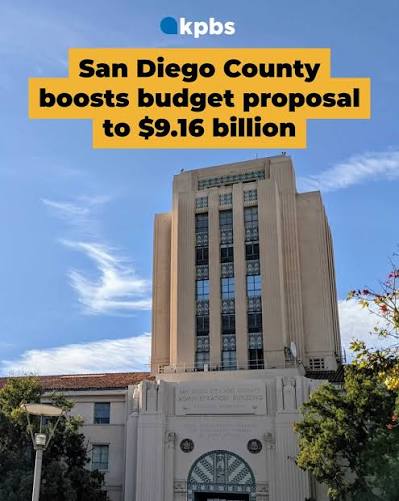
he San Diego County Board of Supervisors unanimously adopted a balanced $9.16 billion budget for fiscal year 2026-27 in late June, a spending plan county officials describe as designed to maintain core services while building in fiscal stability against what has become an unusually volatile federal funding environment. The budget takes effect alongside a wave of other county actions this summer, including a new food distribution program aimed at an estimated 93,500 residents at risk of losing CalFresh benefits under new federal work requirements, and a pursuit of $20 million in state funding for permanent supportive housing in Chula Vista.
From a pure fiscal-governance standpoint, the county’s approach mirrors a pattern playing out at the state level: build reserves and flexibility now, because the size and timing of federal funding for healthcare, food assistance and housing programs has become genuinely difficult to forecast. California’s own 2026-27 budget relies on stronger-than-expected tax revenue to delay deeper Medi-Cal and social-service cuts rather than avoid them outright — a signal that county planners at every level are budgeting for continued turbulence rather than a return to predictable federal funding cycles.
The county’s new food distribution program is a direct response to that turbulence. With federal work-requirement changes threatening CalFresh eligibility for tens of thousands of residents, the Board of Supervisors opted to fund a local backstop rather than wait for state or federal mitigation that may not fully materialize. It’s a relatively small dollar commitment set against a $9.16 billion budget, but it reflects a broader strategy: absorb federal policy shocks locally when possible, rather than passing the disruption directly on to residents and the nonprofit organizations that serve them.
Housing tells a similar story. The county’s pursuit of $20 million in state funding for permanent supportive housing in Chula Vista — aimed at veterans and people experiencing mental health or substance-use challenges — comes alongside a newly opened workforce sleeping-cabin site in Pacific Beach, part of a broader push to diversify the county’s homelessness response beyond traditional shelter models. These are modest-scale interventions relative to the size of the county’s homelessness challenge, but they represent a deliberate strategy of pursuing multiple funding sources and program types simultaneously, rather than depending on any single source.
For San Diego’s nonprofit and healthcare finance community, the county budget offers a useful read on institutional risk management under real fiscal pressure: build reserves, diversify funding sources, and fund local backstops for federal program gaps before they become full-blown service crises. It’s an approach that mirrors the same discipline that healthcare and social-service organizations across the county are now being asked to apply to their own budgets, as state and federal support becomes less reliable than it has been in years past.
— Jose E. Navarro, The Navarro Report / Human-Directed AI Journalism: Research, analysis, and editorial direction by the author. Drafted in partnership with Claude AI (Anthropic).