TEHRAN — World Affairs | The Navarro Report
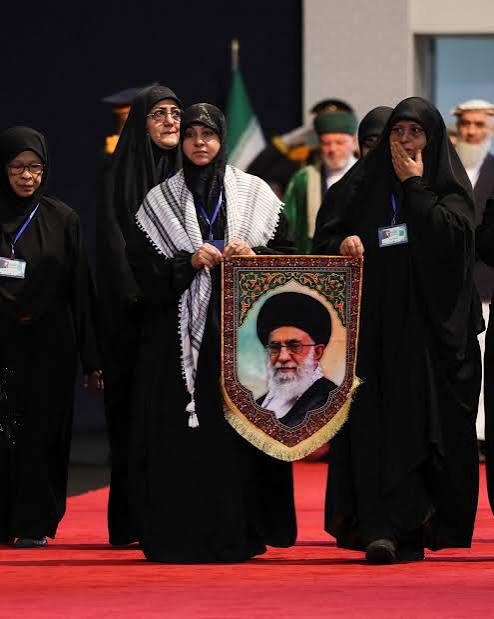
Iran began a week of state funeral processions on July 4 for Supreme Leader Ayatollah Ali Khamenei, more than four months after he was killed in a joint US-Israeli strike on his Tehran compound. The delay, and the fact that his son and declared successor has not been seen in public since, has left foreign analysts and ordinary Iranians alike describing the ceremonies as much as a test of the theocracy’s stability as a farewell to the man who led it for nearly four decades.
Khamenei was killed on February 28, the opening strike of what is now called the 2026 Iran war, in an operation Israeli officials said was built on intelligence from the US Central Intelligence Agency. President Donald Trump confirmed the killing hours later, writing that Khamenei and other Iranian leaders had been unable to evade “our Intelligence and Highly Sophisticated Tracking Systems,” and that strikes would continue until they achieved “PEACE THROUGHOUT THE MIDDLE EAST AND, INDEED, THE WORLD.” Israeli Prime Minister Benjamin Netanyahu said the joint operation was intended to “remove the existential threat posed by the terrorist regime in Iran,” and separately told Iranians in a video address that the strikes would let them “take their destiny into their own hands.” Iran’s government initially disputed the reports; Foreign Minister Abbas Araghchi told NBC News that Khamenei was alive “as far as I know,” hours before Tehran confirmed his death.
The strike also killed the commander of the Islamic Revolutionary Guard Corps, Iran’s defense minister, and a top security adviser, leaving what the Associated Press described at the time as a leadership vacuum with no clear successor, since the position of deputy supreme leader had been abolished in 1989. Iran’s Assembly of Experts moved quickly regardless, naming Khamenei’s son Mojtaba as the new supreme leader on March 8. Mojtaba was reportedly wounded in the same wave of strikes that killed his father, and has not made a public appearance since, with state media citing security concerns and some foreign outlets, including South Korea’s Chosun Daily, reporting possible health complications. His wife, Zahra Haddad-Adel, was killed in the same strike according to Iranian authorities, and her funeral was held in Tehran just two days before her father-in-law’s.
Khamenei’s own funeral was originally scheduled for early March but was postponed as the war continued. A 40-day mourning commemoration went ahead on April 9 without a funeral, an unusual gap that the Organization of Iranian American Communities and other Iran analysts said signaled internal crisis, since Shiite tradition calls for burial by the fortieth day. The ceremonies finally set for July 4 through 9 will move Khamenei’s body through Tehran, then to the seminary city of Qom, then across the border into Iraq for processions in Karbala and Najaf, before a final burial in Mashhad at the Imam Reza shrine. Iranian officials say representatives from roughly 90 countries have signaled they will attend some portion of the events, including delegations from Russia, led by Dmitry Medvedev, China, Pakistan, and even Georgia and Afghanistan’s Taliban government, alongside large crowds of Shiite pilgrims from Iraq and Lebanon.
The scale expected has raised safety concerns independent of politics. An estimated 10 million people attended the 1989 funeral of Iran’s first supreme leader, Ayatollah Ruhollah Khomeini, a crush that killed at least eight mourners; the 2020 funeral procession for Revolutionary Guard commander Qassem Soleimani was worse, with a stampede that killed at least 56 people and injured more than 2,000. Iranian officials have not said publicly how they intend to prevent a repeat at a funeral expected to draw even larger crowds nationwide, though the country’s Judiciary chief, Gholam-Hossein Mohseni-Ejei, is among the interim leadership council members announced to help steady the government pending Mojtaba’s eventual public emergence.
The funeral unfolds against a backdrop of genuine public division that predates the war. In January, a government crackdown on nationwide protests over inflation and the collapsing rial killed thousands of civilians, according to accounts cited by international monitors, and many of the demonstrators had explicitly called for Khamenei’s removal. When his death was confirmed in February, videos circulated of celebrations in cities including Isfahan, Karaj, Kermanshah, Shiraz and Izeh, and of a statue of Khamenei being toppled in the town of Dehloran. Iran International, an opposition-aligned outlet, characterized his killing as the end of what it called a repressive era; other Iranian voices interviewed by international outlets in the days after his death said they regretted only that he had not lived to face accountability for decades of state violence. Iranian President Masoud Pezeshkian, by contrast, described the killing as a “great crime” that would not go unanswered, and Armed Forces chief of staff Mohammad Bagher Ghalibaf said the call for retribution “must ring in the ears of the whole world.”
Legal scholars have continued to debate the strike’s basis under international law well after the fact. Writing for the Just Security blog, a group of international law academics have published a running series of essays questioning whether targeting a head of state during active, if informal, nuclear negotiations set a dangerous precedent for the international norm against political assassination, while other contributors have argued Iran’s own missile and drone retaliation against Israel, Gulf states and US bases amounted to unlawful escalation in its own right. Congressional Democrats separately criticized Trump for launching the strike without seeking authorization from Congress beforehand, a process question the administration has said was satisfied by advance, informal briefings to select party leaders in both chambers.
The funeral proceedings arrive during a fragile pause in US-Iran diplomacy. An interim ceasefire deal reached in June opened a 60-day window for negotiators to hammer out terms for formally ending the war, including the fate of Iran’s nuclear program and the previously blockaded Strait of Hormuz, a critical oil shipping route that Iran closed for weeks after the war began, triggering a global fuel-price spike. Technical talks began this week in Qatar but have already been complicated by disagreements and, according to several news accounts, brief exchanges of fire between US and Iranian forces even as the diplomatic track continues. Those talks are formally paused for the week of the funeral, with both sides indicating some quiet progress has nonetheless been made on narrower issues.
What comes next for Iran’s leadership remains genuinely uncertain. Mojtaba Khamenei’s continued absence from public view, more than three months after his formal selection as supreme leader, is unprecedented for the position and has fueled speculation ranging from serious injury to a deliberate strategy of avoiding the kind of public appearance Israel has previously used to track and strike Iranian officials. Whether the funeral itself, and the international attendance Iran’s government is treating as proof of enduring legitimacy, gives the new supreme leader enough political cover to finally step into public view may do more to answer the succession question than anything Iranian state media has said in the four months since his father’s death.
— Jose E. Navarro, The Navarro Report / Human-Directed AI Journalism: Research, analysis, and editorial direction by the author. Drafted in partnership with Claude AI (Anthropic).