Border / Binational Issues | ~500 words
Last July, U.S. and Mexican officials announced what sounded like a breakthrough — a formal agreement to “permanently and urgently” end the Tijuana River sewage crisis. The South Bay International Wastewater Treatment Plant would expand from 25 to 35 million gallons per day. Mexico committed $59 million toward upstream infrastructure in 2026. Construction timelines were accelerated. The EPA called it a turning point.
Three weeks ago, another massive sewage spill hit the valley.
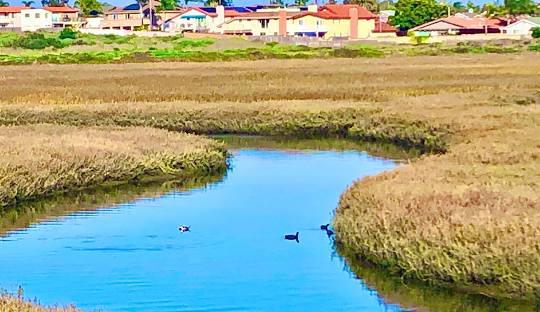
That’s not a gotcha. Fixing decades of cross-border infrastructure failure takes time, and the construction work is genuinely underway. Projects to block 5 million gallons per day of sewage from entering the river are now in progress. That matters. But anyone who has been watching this story for more than a news cycle knows how many “turning points” this region has already lived through.
The core problem isn’t a lack of agreements. It’s a structural one that no MOU fixes: Tijuana’s sewage system is operated by CESPT, a Baja California state utility funded almost entirely by user fees that don’t cover maintenance costs. Federal money from Mexico is intermittent, short-cycle, and tied to bureaucratic timelines that don’t match what a failing pipe network actually needs. The result is a utility in permanent reactive mode — patching instead of planning, responding to collapses instead of preventing them.
More than $1 billion in U.S. funding has now been directed at the downstream solution: treating sewage after it crosses the border. That’s the South Bay plant. And the plant matters — without it, the contamination would be far worse. But a May 2026 analysis by Times of San Diego put the upstream reality plainly: the real problem is in Tijuana, and the infrastructure there is chronically underfunded regardless of what gets signed in Washington or Mexico City.
The communities bearing the cost aren’t abstract. Imperial Beach has had some of the most polluted coastal water in the country for years. San Ysidro and Nestor deal with air quality impacts from aerosolized contamination. These are majority-Latino communities with limited political leverage at the federal level and no direct say in how CESPT is run.
California’s position is awkward. The state has secured meaningful funding — $703 million in federal investment by the end of 2024, plus $46 million in Proposition 4 money — and Governor Newsom has been publicly aggressive in pushing for federal attention. None of that changes the jurisdictional reality: the upstream infrastructure is in Mexico, and California can fund treatment plants on its side of the border without ever solving the source.
The 2025 MOU sets a hard deadline of December 2027 for completing the Minute 328 projects. Mexico has reportedly obligated the 2026 funding commitment and then some. That’s actual progress.
But if history is any guide, the communities in the Tijuana River Valley will be watching very carefully to see whether 2027 becomes another deadline that quietly slips. They’ve earned their skepticism.
— Jose E. Navarro, The Navarro Report / Human-Directed AI Journalism: Research, analysis, and editorial direction by the author. Drafted in partnership with Claude AI (Anthropic).