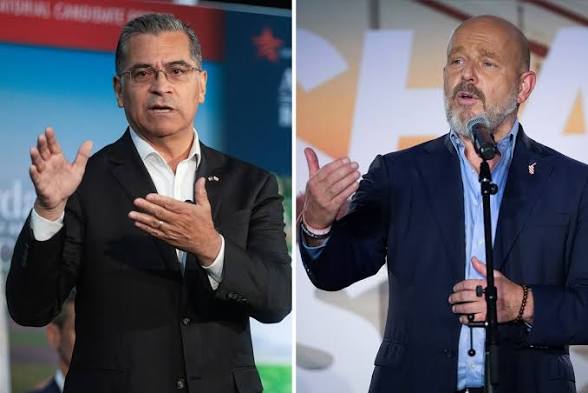
For months, the California governor’s race looked like a political traffic jam — too many Democrats, no clear frontrunner, and real fear among party insiders that the state’s open primary could deliver two Republicans to the November ballot. Then Eric Swalwell imploded, Becerra surged, and by the time the June 2 results fully cleared, the general election matchup was set: former HHS Secretary Xavier Becerra against Trump-backed former Fox News host Steve Hilton.
On paper, Becerra should win easily. Democrats outnumber Republicans in California nearly two to one. Trump lost the state by 20 points in 2024. California voters haven’t elected a Republican governor in two decades. And Hilton, though politically savvy, carries the weight of Trump’s endorsement in a state where the president’s approval numbers are toxic.
But there are reasons this race deserves more attention than a foregone conclusion usually gets.
Start with turnout. Just over 23 percent of California voters cast ballots in the June primary — one of the lowest showings in recent memory, and a fraction of the 57 percent who showed up for the 2008 presidential primary. Low turnout elections are unpredictable. They reward intensity over volume, and no one in this race has more intensity behind them than Hilton’s coalition of voters who believe California is broken and blame Democrats entirely.
Hilton ran a disciplined primary campaign: first $100,000 in income tax-free, electric bills cut in half, $3 gas. Simple, economically targeted messages in a state where the cost of living has driven middle-class families out for years. He did not win more votes than Becerra — by final count, Becerra took about 28 percent to Hilton’s 25 — but he consolidated almost the entire Republican base, plus independents frustrated with one-party governance. “Sixteen years of one-party rule,” he repeated in every debate. It landed.
Becerra’s path looks different. He ran on experience and credibility — 36 years in elected office, a track record suing Trump during the first administration, and the argument that California needs someone who knows how government works, not someone who wants to blow it up. He would be the first Latino governor of California in modern history, following Romualdo Pacheco who served briefly in 1875. That matters to a significant portion of the state’s electorate, and he holds strong favorability numbers among Latino voters.
What Becerra does not have is a bold policy agenda. He graded Gavin Newsom an “A for effort” on homelessness at a primary debate — a line that prompted audible groans from progressive quarters. He has not proposed major departures from Newsom’s approach on housing or health care. For voters who want someone to fix California, not continue it, that’s a liability.
The general election will hinge on a few things. Whether Hilton can consolidate enough disaffected independent voters. Whether Latino turnout materializes for Becerra at the scale his team expects. And whether the national political environment — with Trump still in office, tariffs battering the California economy, and federal program cuts hitting the state’s most vulnerable communities — galvanizes Democratic voters who sat out June.
November is five months away. In California politics, five months is a long time. The 2026 governor’s race is not over. It’s just getting started.
— Jose E. Navarro, The Navarro Report / Human-Directed AI Journalism: Research, analysis, and editorial direction by the author. Drafted in partnership with Claude AI (Anthropic).