
SAN DIEGO — San Diego Local | The Navarro Report
In a reversal few would have predicted a generation ago, San Diego County — once among the most import-dependent water agencies on the Colorado River — is now positioning itself to sell surplus water to other parts of the drought-stricken Southwest, a shift local officials say could ease pressure on the region’s own water rates.
The San Diego County Water Authority signed a memorandum of understanding earlier this month with the federal Bureau of Reclamation and water agencies in Nevada and Arizona to begin formal talks on an interstate water transfer and exchange program, something no agency in the Colorado River basin has attempted at this scale. Water Authority General Manager Dan Denham called the agreement a turning point for how the region manages water. “Our region in general took a monumental step” toward reshaping Southwest water management, he said.
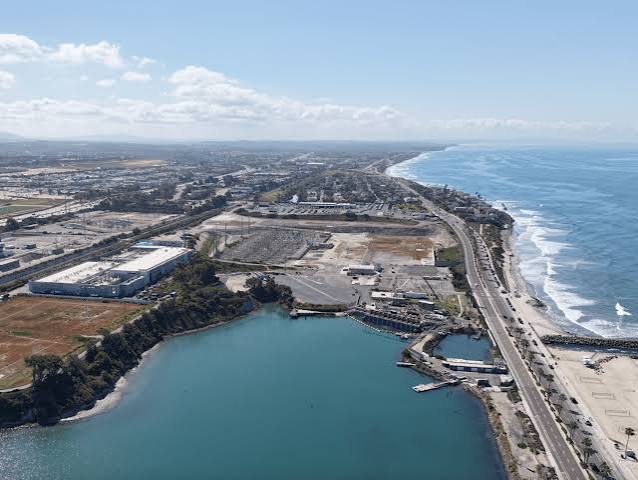
The shift is possible because of three decades of local investment, most notably the Claude “Bud” Lewis Desalination Plant in Carlsbad, which has produced more than 124 billion gallons of drinking water since coming online in 2015. Because San Diego now generates its own supply independent of the Colorado River, the county has water to spare even as the river’s flow has dropped by roughly 20 percent since 2000 amid a climate-driven megadrought affecting the 40 million people who depend on it, including fast-growing cities like Las Vegas and Phoenix.
The interstate proposal builds on deals San Diego has already struck closer to home. Over the past several months, the Water Authority signed 21-year agreements to sell water to the Western Municipal and Eastern Municipal water districts in Riverside County, arrangements expected to generate roughly $13.5 million annually and deliver more than $170 million to San Diego ratepayers over their first five years combined. Water Authority Board Chair Nick Serrano said the sales let the region capture value from decades of infrastructure spending. Selling water “maximizes the value of the investments San Diego County residents made” while keeping rate increases more predictable, he said.
San Diego Mayor Todd Gloria, whose city is the Water Authority’s largest member agency, welcomed the Riverside County agreements as a model for future deals. He called the arrangement “the kind of common-sense partnership people want to see,” noting it strengthens regional water reliability without requiring new infrastructure, since deliveries move through the existing Metropolitan Water District system.
Not everyone views the strategy as an unqualified success. Environmental advocates note that desalinated water costs five to ten times more to produce than water drawn from the Colorado River, and that San Diego ratepayers have already absorbed years of higher bills tied to the Carlsbad plant’s construction and operating costs. Patrick McDonough of San Diego Coastkeeper said that having built the expensive infrastructure, the region should now make the most of it. “It makes sense to sell it to others who are willing to pay for it now,” he said, while cautioning that conservation and water recycling — not desalination — will do more long-term to protect the broader Colorado River system.
Any binding interstate sale would still require approval from the U.S. Department of the Interior, and officials caution the current agreement authorizes only exploratory talks, not an actual transfer of water. Even so, the fact that San Diego — long a symbol of Southern California’s water vulnerability — is now discussing exporting supply marks a notable turn in a regional water story that has been defined for decades by scarcity rather than surplus.
The stakes extend well beyond San Diego’s own rate-payers. Colorado River negotiators from California, Arizona and Nevada have spent much of the past two years trying to hammer out a new set of operating guidelines for the river ahead of the current rules’ expiration, talks complicated by record-low reservoir levels at both Lake Mead and Lake Powell. Southern Nevada Water Authority officials have said publicly that Las Vegas, in particular, is eager to explore any arrangement that adds flexibility to a system increasingly strained by climate-driven drought. Whether San Diego’s model — pairing expensive but drought-proof desalinated supply with exports of its Colorado River entitlement — becomes a template other agencies replicate, or remains a uniquely San Diego solution enabled by the Carlsbad plant, is likely to shape how the broader Southwest approaches water scarcity for years to come.
— Jose E. Navarro, The Navarro Report / Human-Directed AI Journalism: Research, analysis, and editorial direction by the author. Drafted in partnership with Claude AI (Anthropic).