
SAN DIEGO — July 6, 2026
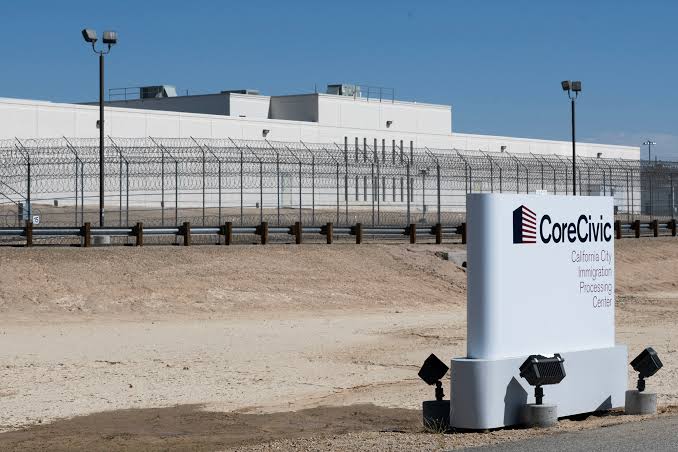
Private prison operator CoreCivic has sold the Otay Mesa Detention Center in San Diego County to the U.S. Department of Homeland Security, part of a combined $1.5 billion transaction that also included the company’s newer California City Detention Facility in Kern County, according to a filing with the U.S. Securities and Exchange Commission and a company announcement issued Monday.
The sale closed on July 2, with the federal government paying $739.2 million for the 1,994-bed Otay Mesa facility and $732.6 million for the 2,560-bed California City site, which opened last year on land CoreCivic previously operated as a state prison. Maryland-based CoreCivic said it expects roughly $1.1 billion in net proceeds after an estimated $400 million in taxes and transaction costs, funds the company says it plans to use largely to pay down debt, including up to $270 million on its revolving credit facility and the remaining $238.5 million of senior notes due in 2027, with any leftover proceeds potentially directed toward further debt reduction or stock buybacks.
CoreCivic said it intends to keep managing day-to-day operations at both facilities under its existing contracts with U.S. Immigration and Customs Enforcement, though the company acknowledged in its SEC filing that there is no guarantee those arrangements will continue once the federal government owns the underlying real estate. The Otay Mesa management contract runs through December 2029, with an option to extend five additional years, while the California City contract expires in August 2027. CoreCivic President and CEO Patrick Swindle said in a statement that the company was “pleased with the sales of these two mission-critical facilities for the Company’s government partner,” describing the deal as evidence of the value of its real estate portfolio and its role as a long-term partner to government agencies.
The acquisition fits into a broader federal push to expand government-owned immigration detention capacity rather than relying primarily on the two largest private prison contractors, an approach previously described in ICE planning documents as its “Detention Reengineering Initiative,” according to a Brennan Center for Justice brief published earlier this year. The purchase comes as the Department of Homeland Security has received a sharply larger enforcement budget, including roughly $170 billion allocated for immigration enforcement and detention in the 2025 federal budget, with $45 billion of that specifically earmarked for expanding detention capacity through fiscal year 2029. CoreCivic disclosed it is in early discussions with ICE about the potential sale of additional facilities, though the company cautioned those talks may not result in a deal.
The Otay Mesa facility arrives at this ownership change already under sustained local scrutiny. San Diego County officials sued the federal government and CoreCivic earlier this year after county health inspectors said they were blocked from completing a full inspection required under a 2024 state law; a federal judge subsequently ordered that county health officials be granted access. County Supervisors Terra Lawson-Remer and Paloma Aguirre were among the local officials who said they were denied entry during that inspection effort. A California Department of Justice report issued earlier this year concluded that overcrowding at the facility had affected detainees’ access to prompt medical care and basic necessities, and county officials have said detainees reported freezing temperatures and food they described as unfit for consumption. CoreCivic and fellow private-prison operator GEO Group have separately challenged California’s county-inspection law in court, arguing it improperly burdens a core federal function.
Reaction to the deal has broken along familiar lines. Immigrant-rights advocates have characterized the sale as evidence that the federal government’s expanded detention footprint in San Diego is becoming permanent infrastructure rather than a temporary enforcement surge, while CoreCivic has framed the transaction in more conventional financial terms, describing it to investors as a straightforward real estate sale that strengthens its balance sheet while preserving its role as facility operator. Company spokesperson Ryan Gustin noted that asset sales of this kind “are not uncommon for government,” pointing to CoreCivic’s history of completing similar transactions with government partners in the past.
For San Diego, the sale changes who owns the land and buildings but does not, in the near term, change who runs the facility or how it operates: CoreCivic remains the on-the-ground operator under its ICE contract, and the litigation over inspection access and detainee conditions continues to move through the courts independent of who holds title to the property. The bigger question raised by the transaction is a national one — whether shifting billions of dollars in private-prison real estate onto the federal government’s own balance sheet marks the start of a broader, more permanent expansion of immigration detention capacity that will outlast any single administration’s enforcement priorities, and whether San Diego County’s ongoing effort to inspect and hold accountable a facility in its own backyard becomes any easier, or harder, once its landlord is the federal government itself.
— Jose E. Navarro, The Navarro Report / Human-Directed AI Journalism: Research, analysis, and editorial direction by the author. Drafted in partnership with Claude AI (Anthropic).