
U.S. Launches New Strikes on Iran After Tanker Attacks in Strait of Hormuz
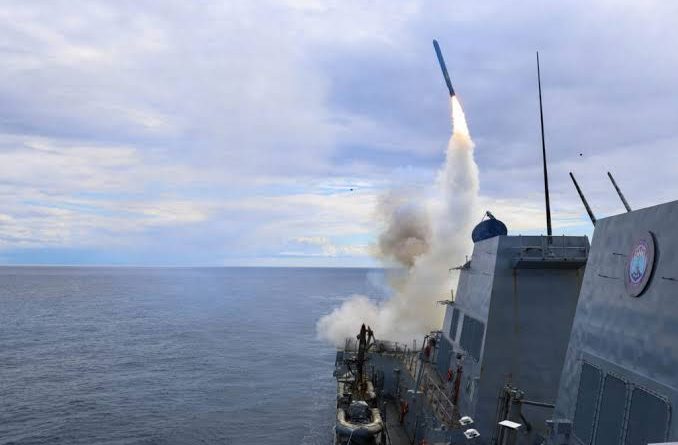
The fragile ceasefire between the United States and Iran came under renewed strain this week after U.S. Central Command confirmed a fresh round of strikes against Iranian military targets, in retaliation for attacks on commercial shipping vessels transiting the Strait of Hormuz.
According to CENTCOM, U.S. forces struck more than 80 targets across Iran late Tuesday, including air defense systems, command and control networks, coastal radar installations, anti-ship missile batteries, and dozens of small boats belonging to the Islamic Revolutionary Guard Corps. The Pentagon described the operation as necessary to degrade Iran’s capacity to threaten international trade routes through one of the world’s most vital energy corridors, through which roughly a fifth of global oil supply typically flows.
The Trump administration simultaneously reimposed sanctions on Iranian oil exports, a move officials characterized as an economic complement to the military response. Iranian state media reported explosions at several strategic sites, including Kharg Island, a critical hub for the country’s oil exports, as well as the port cities of Bandar Abbas and Sirik.
Iran’s government responded with a public warning that it would deliver what officials called a crushing response to the American strikes, and air defense systems were activated in both Bahrain and Kuwait shortly afterward as a precaution against possible retaliation. Bahrain hosts the headquarters of the U.S. Navy’s Fifth Fleet, which patrols the Persian Gulf, Red Sea, and Arabian Sea, making it a likely flashpoint should hostilities widen.
The escalation comes at a delicate moment for American diplomacy. President Trump traveled to Ankara this week for the NATO summit, where he has pressed allies on defense spending commitments and floated lifting sanctions on Turkey while considering the sale of F-35 fighter jets to Ankara. Israeli Prime Minister Benjamin Netanyahu has publicly objected to that potential sale, arguing that arming Turkey with America’s most advanced fighter jet does not serve U.S. interests given tensions between Washington and Ankara over regional alignments.
The renewed strikes also land against the backdrop of Iran’s own internal mourning period. A week-long funeral procession for the country’s former Supreme Leader, killed in earlier U.S.-Israeli strikes, drew large crowds calling for retaliation against both the United States and Israel. That atmosphere of grievance has complicated efforts by American officials to frame the conflict as a limited, targeted campaign rather than an open-ended war.
A U.S. official told reporters that the scale of the latest strikes was intentionally disproportionate to Iran’s tanker attacks, describing the operation bluntly as punishment rather than a measured tit-for-tat response. That characterization is likely to fuel debate in Washington and among European allies over whether the campaign risks spiraling beyond its stated aim of protecting commercial shipping.
Several European NATO members have already declined to allow their bases or airspace to be used for offensive operations against Iran, even as they continue to support broader alliance objectives. The United Kingdom, for example, has permitted its facilities to be used only for what it terms limited defensive purposes in the Gulf region, reflecting a broader European reluctance to be drawn directly into the confrontation.
For businesses and shipping interests that depend on safe passage through the Strait of Hormuz, the immediate concern is more practical than diplomatic: whether insurance costs and shipping delays will spike again as they have during past periods of regional tension. Analysts have long warned that even brief disruptions to Hormuz traffic can ripple through global energy prices within days.
As of this writing, both Washington and Tehran appear to be signaling resolve rather than de-escalation. Whether the coming days bring a return to the earlier ceasefire framework or a further widening of hostilities will likely depend on decisions made away from the cameras — in back-channel communications between American, Iranian, and regional intermediaries who have kept prior rounds of this conflict from spilling further out of control.
Energy markets reacted cautiously to the news, with analysts noting that even a temporary closure or slowdown of Hormuz traffic historically produces an immediate spike in crude oil futures. The strait remains one of the most tightly monitored chokepoints in global trade, and any sustained disruption would likely ripple into fuel prices well beyond the Gulf region, including at gas pumps in the United States.
Congressional reaction has so far split along familiar lines, with some lawmakers calling for a formal war powers debate before further escalation, and others backing the administration’s framing of the strikes as a defensive response to attacks on international shipping.
Regional governments from Riyadh to Abu Dhabi are watching closely, wary of being caught between a superpower confrontation and their own economic dependence on stable shipping lanes.
This report reflects developments as of publication and will be updated as the situation evolves.
— Jose E. Navarro, The Navarro Report / Human-Directed AI Journalism: Research, analysis, and editorial direction by the author. Drafted in partnership with Claude AI (Anthropic).