
By Jose E. Navarro | The Navarro Report | World Affairs | Analysis | July 9, 2026
When President Trump told reporters aboard Air Force One this week that the ceasefire with Iran was “over,” he framed it as a response to Iranian attacks on commercial tankers in the Strait of Hormuz. That is the proximate cause. But five months into a war that began with a joint U.S.-Israeli strike on February 28, a harder question has settled over Washington: whose strategic interest is actually being served by a conflict that the IMF now says is dragging down global growth, and whose incentives are shaping the president’s decisions to keep escalating rather than close it out.
A Coordination Record, Not a Secret
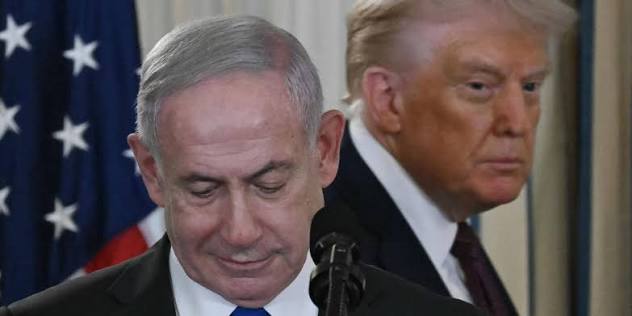
This is not a question of hidden influence. The coordination between Trump and Israeli Prime Minister Benjamin Netanyahu has been extensive and, for the most part, openly reported. The two leaders met in person on February 11 and spoke by phone roughly 15 times in the two months leading up to the war, according to U.S. and Israeli officials. Netanyahu has met with Trump seven times since the president’s return to office in 2025, using many of those conversations to redirect Trump’s attention from Gaza toward Iran’s nuclear and missile programs, a U.S. official with direct knowledge of the calls has said. The operational trigger came on February 23, when Netanyahu called Trump with intelligence suggesting Iran’s senior leadership would be gathered at a single location days later — a tip that set the strike in motion.
Israeli officials involved in the planning have been candid about who wanted to move faster. One official told Axios that Trump had wanted to strike as early as January, and that it was Netanyahu who asked to delay for further coordination. That detail cuts against a simple narrative of Israeli pressure forcing a reluctant Trump into war. But other moments point the other way: in a tense May phone call reported by CNN, Netanyahu pushed Trump to resume strikes Trump had paused in favor of diplomacy with Gulf mediators, and Israeli sources described mounting frustration in Netanyahu’s inner circle at what they saw as Iranian diplomatic stalling that only benefited Tehran.
The Incentive Argument
Set aside the day-to-day coordination and look at the underlying incentives, and a structural case emerges for why Israel may have more to gain from a long war than the United States does. For Israel, a prolonged campaign further degrades Iran’s ballistic missile stockpiles and delays any path to a nuclear weapon indefinitely — an outcome Netanyahu has pursued through multiple U.S. administrations, reportedly telling Fox News that he had tried to persuade previous presidents to take firm action and that Trump finally did. Tel Aviv University political scientist Udi Sommer has noted that a relatively short, successful war works heavily in Netanyahu’s political favor domestically, reinforcing his image as Israel’s protector at a moment when his own security credentials have been under pressure since October 7, 2023.
For the United States, the calculus looks different on paper. The IMF’s July World Economic Outlook attributes a full percentage point of lost 2026 global growth to the war, driven by a shuttered Strait of Hormuz, oil prices running roughly a third higher than pre-war levels, and inflation pressures that are squeezing American consumers alongside everyone else. U.S. forces have also absorbed direct costs: Iranian retaliatory strikes have hit American bases in Bahrain, Kuwait and Qatar, and the State Department scrambled an emergency evacuation for more than 1,500 Americans caught unaware when the initial February strike proceeded faster than public messaging could keep up.
The Domestic Pressure Channel
Beyond the Trump-Netanyahu relationship itself, a second and more diffuse channel of influence runs through Congress. Pro-Israel political action committees, led by AIPAC’s affiliated super PAC United Democracy Project, entered the 2026 midterm cycle with more than $100 million to spend, and have already funneled tens of millions into primary races nationwide, frequently through smaller affiliated PACs that obscure the original source of the money, according to reporting from the American Prospect and Al Jazeera. A UDP spokesperson has said the strategy is aimed squarely at candidates who are “detractors of Israel or who want to put conditions on aid.” Whatever one makes of that spending as a matter of election law, its practical effect is to narrow the range of positions on Israel and Iran that are politically survivable in Congress — which in turn shapes what kind of pushback, if any, a president faces if he wants to wind down U.S. involvement in the war.
The Case Against the Premise
The strongest evidence against the influence thesis comes from Trump himself. Asked directly whether Israel had pulled the United States into war, he rejected the framing outright, telling reporters at the White House that based on how negotiations were going, he believed Israel was going to attack first regardless — and that if anything, he may have forced Israel’s hand rather than the reverse. Secretary of State Marco Rubio made a similar case to Capitol Hill reporters, arguing the operation against Iran’s leadership “had to happen anyway” and that the only real question was timing, not whether to act. Trump’s hawkishness toward Iran also predates any renewed Israeli lobbying this cycle; it has been a consistent feature of his foreign policy posture across two administrations, tracing back to his first-term withdrawal from the 2015 nuclear deal.
It is also Trump, not Netanyahu, who has repeatedly been the one applying the brakes. He halted planned strikes in May at the request of Gulf allies pursuing a diplomatic framework, over Netanyahu’s explicit objections, and U.S. officials describe him as weighing military and diplomatic tracks simultaneously rather than simply deferring to Israeli preferences. When asked in May how much latitude Netanyahu actually has, Trump was blunt: he’ll do whatever I want him to do, the president said — the remark of a man asserting he is setting the terms of the alliance, not receiving them.
An Unresolved Question
The honest accounting is that both dynamics are almost certainly operating at once. Netanyahu has clearly used a decade-plus relationship and, at pivotal moments, real-time intelligence to steer the timing and shape of American military action. Pro-Israel political spending has just as clearly narrowed the domestic political space in which any president would have to operate if he wanted to de-escalate unilaterally. But Trump’s own public statements, his history of unilateral pauses for diplomacy, and his long-standing personal hawkishness toward Tehran all complicate any account that treats him as simply carrying out Israeli wishes. The war’s costs — measured now in a global growth downgrade, American casualties from retaliatory strikes, and a stalled ceasefire — are real regardless of whose strategic interest is ultimately being served. Untangling causation from coincidence, in an alliance this closely coordinated, may not be possible from the outside. What is clear is that voters, lawmakers and markets are all being asked to bear the costs of a decision-making process that remains, by design and by circumstance, only partially visible to any of them.
— Jose E. Navarro, The Navarro Report / Human-Directed AI Journalism: Research, analysis, and editorial direction by the author. Drafted in partnership with Claude AI (Anthropic).