
Congress’s Housing Bill Is Becoming Law Without Trump’s Signature — Here’s Who Pays Either Way
By Jose E. Navarro | The Navarro Report | San Diego, Calif. — July 10, 2026
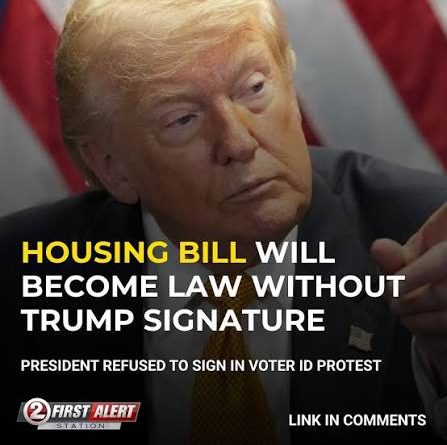
A bipartisan housing bill that cleared Congress last month is set to take effect this week, even though President Trump has refused to sign it. The 21st Century ROAD to Housing Act caps how many single-family homes large institutional investors can buy in a given market while loosening federal permitting rules meant to speed new construction. Trump has tied his signature to a separate, unrelated measure — the SAVE America Act, which would rewrite election law and impose new voter ID requirements — and lawmakers have declined to pair the two. Under the Constitution, a bill Congress passed becomes law without a presidential signature if the president neither signs nor vetoes it within the required window, which is what appears set to happen here.
The timing matters. The National Association of Realtors reported this week that the median U.S. home sale price hit a record high above $440,000, a number that has fueled bipartisan urgency around the bill in the first place. For San Diego, where investor purchases of single-family homes have been a persistent driver of the region’s affordability crunch, a cap on institutional buying could shift the math for first-time buyers competing against cash offers from investment funds — though the practical effect will depend heavily on how regulators define ‘major investor’ and how aggressively the cap is enforced.
The more interesting story here isn’t the housing policy itself — it’s the leverage play. By withholding his signature to extract movement on an unrelated election bill, the president is using a popular, bipartisan measure as a bargaining chip on a separate and far more contentious front. That’s a governing tactic worth tracking heading into the midterms, particularly paired with this week’s other headline: the administration’s move to fire the remaining bipartisan members of the Election Assistance Commission, the agency that certifies voting systems and supports local election officials nationwide, less than four months before voters go to the polls.
For a financial and operations audience, the throughline is this: housing costs, election administration funding, and federal leverage tactics are increasingly bundled together in Washington’s negotiating strategy. Watch for how quickly HUD and the relevant agencies issue implementation guidance on the investor cap, and whether the administration slow-walks enforcement as a continued pressure point.
Human-Directed AI Journalism: This article was researched, directed, and edited by a human journalist using AI tools for drafting assistance. All facts, sourcing, and editorial judgments are the responsibility of The Navarro Report.