
By Jose E. Navarro | The Navarro Report | National
July 10, 2026
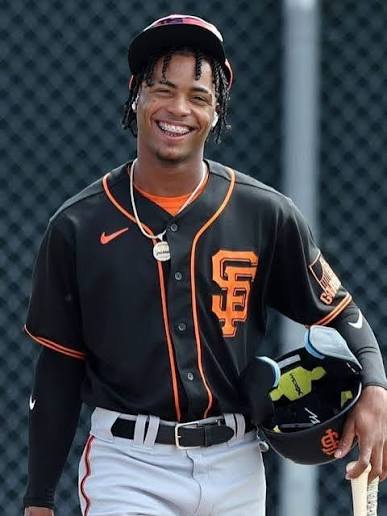
On January 15, while most of the sports world was fixated on this weekend’s amateur draft in Philadelphia, a different kind of baseball economy quietly opened for business. Venezuelan shortstop Luis Hernandez, who had turned 17 only weeks earlier, signed a $5 million contract with the San Francisco Giants — the largest bonus of this year’s international signing class and roughly triple what many first-round picks in the domestic draft will earn in guaranteed money before performance bonuses kick in.
Hernandez is not an outlier so much as the headline of a system built to produce headlines like his. Unlike players selected in the MLB Draft, who must be from the United States, Canada, or Puerto Rico, prospects from the Dominican Republic, Venezuela, Cuba, and elsewhere sign as free agents against team-specific bonus pools that this year range from roughly $5.44 million to $8.03 million per organization, with the ability to expand that by up to 60 percent through trades. Roughly 30 percent of all current MLB players signed this way, a pipeline that has already produced stars like Ronald Acuña Jr., Vladimir Guerrero Jr., and José Ramírez.
The financial mechanics matter because they reveal two very different labor markets operating side by side inside the same institution. A domestic draftee, even a five-tool talent like UCLA’s Roch Cholowsky or Texas prep star Grady Emerson, is bound by MLB’s draft slotting system: his bonus is effectively capped by where he’s picked, and he has no say in which organization signs him. An international free agent as young as 16 — Wandy Asigen, the Dominican shortstop who inked a $3.9 million deal with the Mets, won’t turn 17 until August — can field competing offers from all 30 teams and negotiate directly, sometimes years in advance of the actual signing date.
That negotiating leverage is a double-edged sword. It has produced genuinely life-changing outcomes for teenagers and their families: Francisco Renteria, a Venezuelan outfielder, signed with the Phillies for $4 million; Johenssy Colome, whose father and uncle both pitched in the majors, drew serious interest from the Athletics. But it has also created a market where verbal commitments are made to 13- and 14-year-olds, years before anyone can meaningfully evaluate whether the deal reflects the player’s actual value — a dynamic on stark display this year when the Yankees’ international scouting director was dismissed and the team’s future commitments, including for Asigen, unraveled overnight, sending him to the Mets instead.
The absence of an international draft is not an accident. MLB has pushed for one in labor talks for years, arguing it would create cost certainty and a more orderly system. The players’ union has resisted just as consistently, for the same reason teams want it: an international draft would strip young players and their families of the ability to shop bonuses across 30 buyers and would almost certainly suppress the top-end bonuses that stars like Hernandez and Renteria are commanding today. With the current collective bargaining agreement expiring in December, expect that fight to resurface at the table — and expect the union’s Latin American membership, disproportionately built through this exact free-agent pipeline, to have a lot to say about it.
There is also a geography of risk embedded in these bonus totals that rarely makes it into the box score. This year’s signing period unfolded against the backdrop of U.S. military action in Venezuela, including strikes in Caracas and the capture of President Nicolás Maduro, forcing teams to physically extract prospects like Hernandez from the country through Curaçao and into the Dominican Republic before a contract could even be finalized. Venezuelan academies have been shuttered for some time, and the Venezuelan Summer League itself was suspended in the aftermath of the strikes. That a 17-year-old’s baseball future is now entangled with hemispheric politics is worth sitting with the next time a bonus figure gets flattened into a single line of box-score-style reporting.
For an accountability-minded look at where the money in baseball actually goes, the international bonus pool is arguably a richer subject than the domestic draft itself: it is less regulated, less transparent, and touches a population — teenagers in developing economies — with the least structural power to negotiate on their own behalf, even as individual bonus totals climb into eight figures. Whether that system survives the next round of labor negotiations intact is one of the more consequential, and least covered, storylines in baseball’s business pages this year.
This article was produced through Human-Directed AI Journalism: reporting, editorial direction, and final judgment by Jose E. Navarro, with AI-assisted research and drafting. The Navarro Report.