By Jose E. Navarro | The Navarro Report | California
July 10, 2026
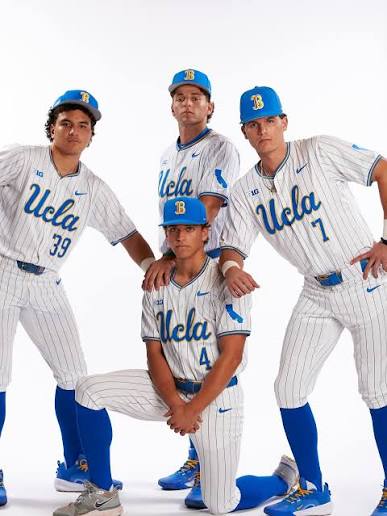
When the White Sox go on the clock Saturday with the first overall pick in the 2026 MLB Draft, there’s a real chance the answer to “who won this class” traces back to a single campus in Westwood. UCLA shortstop Roch Cholowsky enters draft weekend in a genuine three-way race for the No. 1 overall selection, with rival evaluators split between him, Texas prep phenom Grady Emerson, and Georgia Tech catcher Vahn Lackey. Buried a bit further down the board, at No. 27 on ESPN’s final rankings, is Cholowsky’s own teammate: right-hander Logan Reddemann, a college pitcher whose stock took a hit this spring after arm fatigue limited him to a bullpen session at the draft combine instead of live action.
Two players from the same roster in the same draft class, at wildly different points on the board, is a useful lens for a story that’s really about how a single college program builds — and monetizes — draft talent year after year.
Cholowsky’s path is the more traditional one, if traditional can be applied to a player scouts are debating for the top overall pick. Recruited out of an Arizona high school as a sure-handed, hit-first prospect with modest power projection, he added strength across three years in Westwood and turned into UCLA’s offensive centerpiece, hitting .329 with 52 home runs and a 1.072 OPS over his college career. His calling card now is completeness rather than any single loud tool — a 55-grade hit and power combination with reliable shortstop defense — which is exactly the profile that has scouts split on whether he has true superstar upside or is simply an excellent, lower-variance every-day player. Either outcome likely nets UCLA a program-defining moment: a former Bruin going first overall would be the kind of recruiting proof point that reshapes a roster for half a decade.
Reddemann’s arc is the counterpoint. He entered the spring as a legitimate first-round talent before arm fatigue in April sidelined him for the postseason; UCLA’s own College World Series run came without him able to pitch in the regional. He didn’t get to throw a competitive inning at the draft combine either, instead working through a bullpen session for scouts trying to gauge his health from mechanics alone rather than live results. That he’s still projected in the back half of the first round despite the lost season speaks to how much helium his stuff had built up before the injury — and it’s a reminder that a single college program’s draft haul in any given year is as much about who stays healthy in April as who’s the best prospect in the fall.
There’s a broader structural story here about UCLA specifically. The program has become a reliable pipeline for both premium college bats and power arms, benefiting from the same recruiting inputs — access to elite Southern California high school talent, a Big Ten baseball infrastructure still finding its post-realignment footing, and a coaching staff evidently comfortable developing five-tool infielders and power pitchers simultaneously. Beyond Cholowsky and Reddemann, UCLA outfielder Will Gasparino and first baseman Mulivai Levu both appear in the broader top-100 rankings, suggesting this isn’t a two-player fluke so much as a program firing on multiple cylinders in a single recruiting cycle.
For a program, that kind of draft class functions almost like a venture return: the upfront investment is recruiting and player development infrastructure, and the payout — in national visibility, in future recruiting leverage, in alumni and donor enthusiasm — compounds when a former player goes first overall on national television. Whether Cholowsky’s name gets called first on Saturday or Emerson and Lackey leapfrog him at the last minute, UCLA is positioned to have one of the most talked-about draft classes of any single college program this year, health permitting for the pitcher who might have gone first-round himself in a year without an elbow scare.
This article was produced through Human-Directed AI Journalism: reporting, editorial direction, and final judgment by Jose E. Navarro, with AI-assisted research and drafting. The Navarro Report.