
World | July 11, 2026 | By Jose E. Navarro
Three weeks ago, the presidents of the United States and Iran signed the Islamabad Memorandum, a fragile framework meant to end a war that erupted in February with the killing of Iran’s supreme leader and cratered into missile exchanges across the Middle East. The memorandum bought sixty days for negotiators to hammer out a lasting peace. It did not survive three weeks.
By Friday, President Trump had declared the ceasefire over. American forces struck roughly ninety targets inside Iran to, in the words of U.S. Central Command, further degrade Tehran’s ability to threaten freedom of navigation in the Strait of Hormuz. Iran’s Islamic Revolutionary Guard Corps answered with drones and missiles aimed at American positions in the region. It was the second consecutive day of exchanges, and it followed a week in which Iranian forces fired on three commercial vessels transiting Omani waters — a violation, U.S. officials argue, of the very memorandum both governments signed.
What happens next is contingent on a deadline that expires this weekend. The Trump administration is demanding that Iran issue a public statement, delivered through talks in Muscat between Foreign Minister Abbas Araghchi and his Omani counterpart, committing to end all attacks on shipping and explicitly acknowledging that the strait is open. American officials say privately that Iranian intermediaries have already conceded the point — that the attacks were the work of a rogue IRGC faction trying to sabotage the talks, and that Tehran wants to keep negotiating. Publicly, Iran’s Foreign Ministry disputes that account entirely, insisting it is simply fulfilling its obligation to coordinate maritime traffic with Oman.
That contradiction between private de-escalation and public defiance is itself the story. It suggests a government not fully in command of its own military apparatus at a moment when the consequences of miscalculation are severe. Iran’s new Supreme Leader, Mojtaba Khamenei, ascended to the role after his father’s death in the February strikes and used his first public message since the funeral to pledge vengeance. Iran’s chief negotiator, Mohammad Bagher Ghalibaf, says the country is prepared for all-out defense. Trump, for his part, has warned that a thousand missiles are locked and loaded and aimed at the Islamic Republic, with thousands more available should Tehran move against him personally. This is not the vocabulary of a negotiation nearing its conclusion. It is the vocabulary of two governments testing how far brinkmanship can travel before it becomes irreversible.
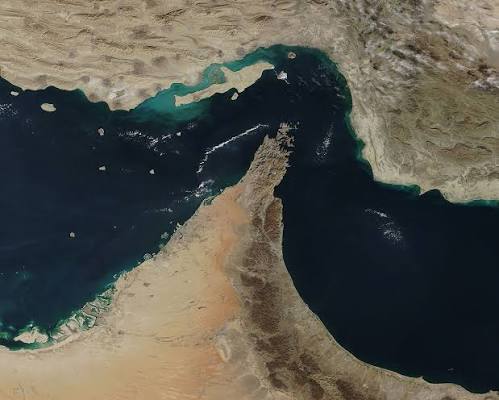
For a journalist trained to read balance sheets before headlines, the more instructive figures are not the missile counts but the shipping data. The Strait of Hormuz carries roughly a fifth of the world’s oil and liquefied natural gas. On Thursday, only thirty-four vessels transited the strait — the lowest daily figure since Iran’s late-June drone attacks — and S&P Global estimates that a third of that traffic belonged to Iran-linked or already-sanctioned shipping willing to absorb risk everyone else is avoiding. Regular gasoline, which averaged $2.98 a gallon before the war began in late February, is climbing again as the ceasefire’s collapse revives fears of a prolonged disruption. For American households, and for California drivers already contending with the nation’s highest gas tax, a Hormuz shutdown is not an abstraction. It is a line item.
The ambiguity at the center of this crisis is instructive for anyone who has ever negotiated a contract for a living. The Islamabad Memorandum calls on Iran to make arrangements for the safe passage of commercial vessels and to consult with Oman to define the future administration of the waterway. That language was vague by design, a diplomatic device meant to get both sides to sign something. But vague language in a binding agreement is a liability waiting to surface, and it has surfaced here in the worst possible way: Iran reads the memorandum as preserving a claim to control parts of the strait, while Washington reads it as requiring Iran to relinquish that claim entirely. Anyone who has watched a grant agreement or a vendor contract unravel over an undefined term will recognize the pattern. Precision at the drafting stage is not bureaucratic fussiness; it is risk management. Its absence here is now being measured in interrupted oil shipments and diverted naval assets.
There is a domestic political dimension worth naming plainly, too. The administration has tied its credibility to a broader nuclear agreement with Iran, and U.S. officials say the two sides had made substantial progress in three weeks of direct and indirect talks before the Hormuz attacks intervened. Washington’s calculation is that Iran’s willingness, or inability, to honor a comparatively simple shipping commitment is a plausible proxy for whether it can be trusted to honor a far more complex nuclear deal. That logic is defensible, but it also raises the cost of failure. If Saturday’s deadline passes without the public statement Washington is demanding, the administration has signaled it will escalate rather than wait, and a nuclear framework that seemed within reach three weeks ago could evaporate along with the ceasefire that was supposed to protect it.
Diplomats in Muscat and Doha are still working the phones. Qatar’s foreign ministry says it remains committed to mediating despite being directly affected by the standoff — a candid admission that the entire Gulf region has a stake in the outcome. Whether Saturday produces a public Iranian statement, another round of strikes, or another temporary patch remains to be seen. What is already evident is that a memorandum built on ambiguous terms has proven no match for a strait both sides insist on controlling, and that the next chapter of this conflict will be written as much in shipping manifests and fuel prices as in any communiqué from the Oval Office or Tehran.
— Jose E. Navarro, The Navarro Report
Human-Directed AI Journalism: Research, analysis, and editorial direction by the author. Drafted in partnership with Claude AI (Anthropic).