
SACRAMENTO — July 6, 2026
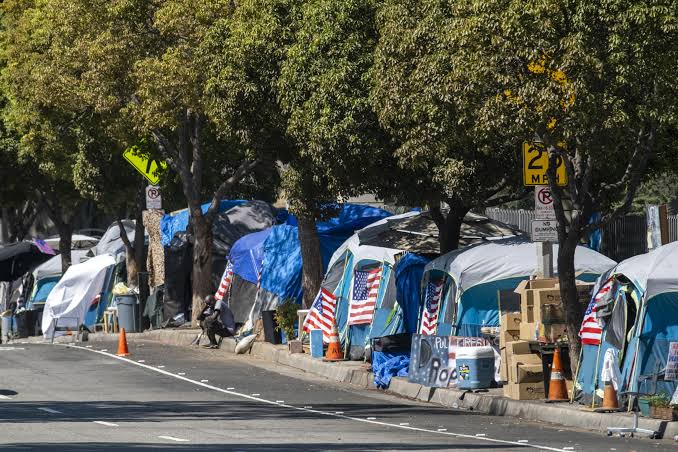
California recorded its first statewide decline in unsheltered homelessness in more than 15 years in 2025, according to preliminary point-in-time count data reported to the U.S. Department of Housing and Urban Development, prompting Governor Gavin Newsom to direct an additional $419 million toward local housing and shelter programs even as budget analysts warn the state’s broader homelessness spending is shrinking.
The data, drawn from counts submitted by 30 Continuums of Care using HUD’s standard methodology, shows unsheltered homelessness falling roughly 9 percent statewide, a reversal that stands out against a national backdrop where homelessness has continued climbing in most other states. Newsom’s office has framed the decline as validation of a strategy the governor first made a top priority in his 2019 State of the State address, combining encampment resolution, expanded shelter capacity, and mental health and substance-use treatment funded in part by Proposition 1, the mental health and housing bond voters approved in 2024.
The $419 million announced by the governor’s office represents the first allocation under the sixth round of the state’s Homeless Housing, Assistance and Prevention program, known as HHAP, and is split among three of the state’s largest regions: roughly $328.8 million for Los Angeles County and surrounding jurisdictions, $50.9 million for San Diego County, and $39.9 million for San Francisco. State officials say the money will fund emergency shelter, interim and permanent supportive housing, rapid rehousing, and continued encampment-resolution work, and comes with new accountability requirements, including a mandate that recipient jurisdictions maintain a state-compliant housing element and a mechanism allowing California to claw back funds from local governments that fail to show measurable progress. A seventh HHAP round, worth $500 million, is planned for the coming budget year, contingent on the same performance standards.
San Francisco Mayor Daniel Lurie credited the state partnership with helping the city change its approach to street homelessness, saying local officials are focused on “getting people off the streets and on a path toward stability.” State officials also point to the Behavioral Health Services Act and continued Caltrans encampment-clearance work, which has removed more than 19,000 encampments and roughly 354,000 cubic yards of debris from state rights-of-way since 2021, as complementary pieces of the broader strategy.
The rosier statewide numbers coexist with a more cautious picture painted by independent budget analysts. A recent brief from the California Budget Center found that overall homelessness-related state spending peaked at $6.8 billion in the 2022-23 fiscal year, driven largely by one-time pandemic-era revenue, before falling to roughly $2.5 billion in 2024-25 and an estimated $1.5 billion in the current fiscal year. The analysis noted that the governor’s proposed 2026-27 budget includes no new state General Fund dollars for affordable housing, and that the planned $500 million for HHAP Round 7 represents roughly a 50 percent cut from earlier funding rounds. Budget Center analysts cautioned that as remaining HHAP dollars are spent down, some communities could face service reductions, staffing cuts, and the loss of existing housing placements as soon as next year absent new, sustained funding.
State officials have also pointed to federal policy as a complicating factor. Newsom’s office says the Trump administration has moved to add administrative requirements to food and health assistance programs relied upon by low-income and unhoused Californians, while delaying some HUD homelessness assistance grants. A HUD-commissioned national report acknowledged the overall decline in both California and nationwide homelessness figures for 2025 but was accompanied by administration officials who argued that homelessness levels remain far higher than a decade ago and that current policy approaches still require an overhaul, a characterization state officials and some advocacy groups have disputed.
The Budget Center analysis also flagged a shift in how the state’s homelessness dollars are being spent, noting that funding for institutional responses, including programs serving people found incompetent to stand trial, has held relatively steady even as flexible HHAP dollars have shrunk, despite those institutional programs not being designed to resolve homelessness on their own. Advocates have pointed to that shift as evidence that, absent new revenue, the state risks solving the wrong part of the problem even as it touts overall gains.
Taken together, the numbers suggest a genuine, if fragile, turning point: the state’s own preliminary data shows fewer people sleeping unsheltered for the first time since before the pandemic-era funding surge, even as the underlying financial commitment that helped produce that shift is, by the state’s own budget documents, contracting. Whether California can sustain a downward trend in street homelessness on a smaller funding base than the one that produced it is likely to be one of the more closely watched policy questions in Sacramento through the 2026-27 budget cycle, particularly for San Diego County, which received nearly $51 million of the initial HHAP Round 6 award and would be directly exposed to any future funding gap.
— Jose E. Navarro, The Navarro Report / Human-Directed AI Journalism: Research, analysis, and editorial direction by the author. Drafted in partnership with Claude AI (Anthropic).